
Fitted Wardrobes for Awkward Spaces That Work
That dead corner beside the chimney breast. The loft bedroom where the ceiling drops just where a wardrobe should go. The alcove that is too narrow for anything off the shelf, yet too visible to leave untidy. This is exactly where fitted wardrobes for awkward spaces make the biggest difference – not by forcing a standard solution into an awkward room, but by designing storage around the room you actually have.
Freestanding wardrobes are built to standard widths, heights and depths. Homes are not. Period properties, loft conversions, extensions and newer builds alike often come with uneven walls, boxed-in pipework, sloping ceilings, bulkheads or odd recesses that make conventional furniture look temporary and wasteful. A fitted approach turns those problem areas into useful storage, while creating a cleaner and more intentional finish.
Why awkward spaces need a bespoke approach
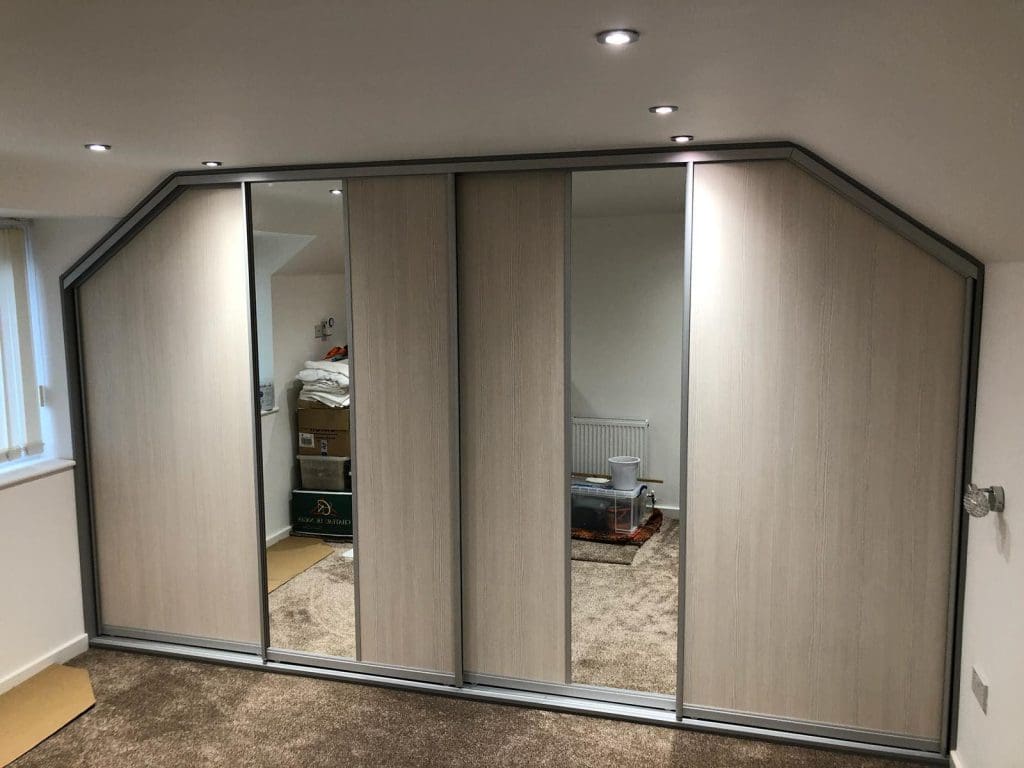
The challenge with awkward rooms is rarely just shape. It is how that shape affects daily use. A wardrobe that technically fits into an alcove may still leave wasted gaps above, behind or to the side. In a loft room, a standard unit might sit under the slope but leave the tallest and most usable part of the wall untouched. In a bedroom with eaves, knee walls or an off-centre window, every inch matters.
Bespoke fitted furniture works because it starts with the room’s exact dimensions and the way you want to use it. That means height can be taken right up to the ceiling, internals can be built around your clothing and accessories, and doors can be chosen to suit the clearance available. The result is not only more storage. It is storage that feels easier to live with.
This is also where quality installation matters. In difficult spaces, the visual difference between a wardrobe that has been carefully scribed and one that has simply been pushed into place is obvious. Clean lines, zero-gap fitting and doors that operate properly despite uneven walls all depend on careful measuring, manufacturing and installation.
The most common awkward spaces for fitted wardrobes
Some rooms cause the same frustrations again and again. Alcoves are a classic example. They are often ideal for wardrobes, but they are rarely symmetrical. One side may be slightly shallower, the ceiling may run out of level, or the chimney breast may affect how doors open. A made-to-measure wardrobe can balance the room visually while making full use of each side.
Loft bedrooms and top-floor rooms present a different challenge. Sloping ceilings reduce where full-height furniture can go, and the temptation is often to settle for low units that do not hold enough. A better option is to design the wardrobe to follow the pitch of the ceiling or combine hanging space in the tallest section with drawers and shelving beneath the lower slope.
Corners can be equally awkward. Standard wardrobes often create inaccessible dead space, especially in L-shaped rooms or where a return wall interrupts the layout. Fitted designs can soften that issue with carefully planned internal sections, corner hanging, or a layout that prioritises the areas you can reach most comfortably.
Then there are the details many people forget until they start planning – skirting boards, coving, boxing around pipes, radiators, sockets and light switches. These are exactly the details that make off-the-shelf furniture frustrating. A bespoke design takes them into account from the start.
Fitted wardrobes for awkward spaces in real life
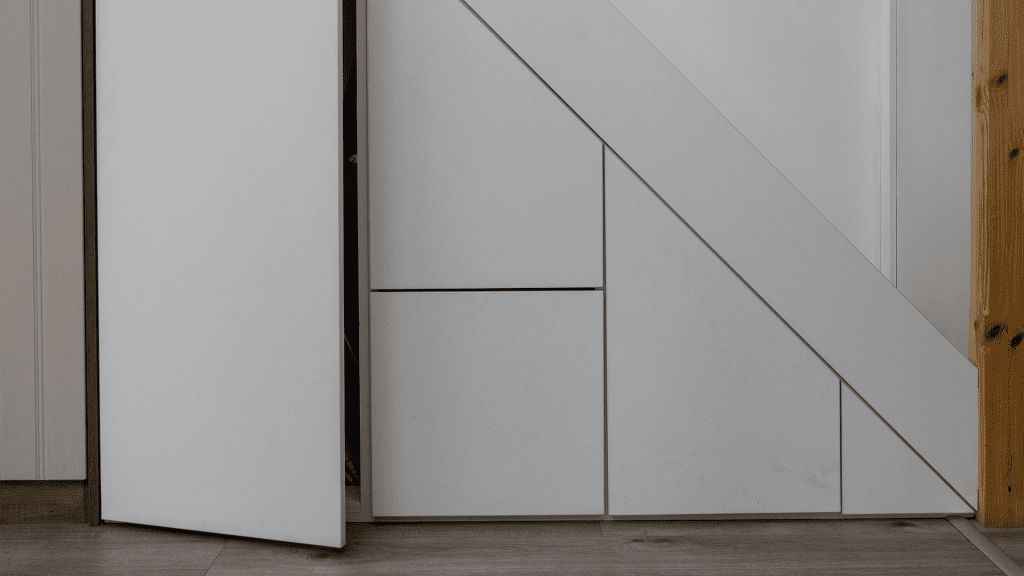
The best design is not always the one that squeezes storage into every possible millimetre. It is the one that suits how you live.
For example, in a narrow alcove bedroom, sliding doors may be the most practical choice because they do not need swing space in front. In a larger room with a broken wall line, hinged doors might offer easier access to the full width of each compartment. Neither option is automatically better. It depends on the room and on what you want from it.
The same applies to internal storage. Long hanging is useful for dresses, coats and suits, but it takes up height quickly. Double hanging can dramatically increase capacity for shirts, trousers and shorter items. Drawers are ideal for smaller clothing and accessories, but too many can eat into larger storage zones. Shelving is flexible, but only if the shelf spacing is sensible. Good design balances all of this rather than overloading the wardrobe with features that look impressive on paper and prove awkward in daily use.
In family homes, this often means creating a mix of easy-access storage and out-of-the-way space. Seasonal bedding, luggage and rarely used items can sit in the upper sections, while everyday clothing stays at a practical height. In loft rooms, where the highest point may be limited, this kind of planning is even more important.
What to consider before choosing a design
Before you focus on finishes and door styles, it helps to think about the room in practical terms. Where do you need clear walking space? Will doors open comfortably next to the bed? Is there enough natural light, or would mirrored doors help brighten the room? Do you need the wardrobe to blend in quietly, or become part of a more design-led scheme?
Depth is another key consideration. A full hanging wardrobe generally needs enough depth for clothes on hangers to sit comfortably. In some awkward spaces, that depth is limited. The answer is not always to abandon the idea. Sometimes a combination of shallow shelving, drawers and selected hanging sections gives a better result than forcing full-depth storage where it does not fit.
Finish also matters more than people expect. Lighter colours can help bulky furniture feel less dominant in smaller or sloped rooms. Woodgrain finishes can add warmth, particularly in older properties where a stark white run may feel too sharp. Glass and mirrored panels can make compact bedrooms feel more open, but they are not right for every interior. A good fitted wardrobe should work hard visually as well as practically.
Why measuring and installation make the difference
Awkward spaces are unforgiving. If measurements are slightly out, door lines can look poor, fillers become oversized and valuable storage is lost. That is why a proper survey matters so much, especially in older homes where walls and ceilings are rarely straight.
Professional design supported by accurate site measurements gives you a much clearer idea of what is possible. It also avoids a common mistake – designing the wardrobe around assumed dimensions rather than the actual room. CAD visuals can be especially helpful here because they show how the finished furniture will sit within the space before manufacturing begins.
Manufacturing to order is just as important. When wardrobes are built for the room rather than adapted at the last minute, you get a neater fit and a more cohesive result. That is particularly valuable in rooms with sloping ceilings, uneven alcoves and unusual angles, where standard modules simply do not align properly.
Getting more from difficult rooms
One of the biggest benefits of fitted wardrobes is that they often improve the room beyond storage alone. A cluttered alcove can become a clean wall of furniture. A loft bedroom can feel calmer and more spacious because storage is built into the architecture rather than scattered around it. Even a modest box room can feel more usable when every inch has a purpose.
This is why bespoke furniture is often a better long-term investment than replacing freestanding units every few years. It is designed around the room, the household and the way you live now. If you want a fitted look that maximises space, reduces visual clutter and solves the awkward parts of the room properly, it is hard to beat.
For homeowners planning improvements in bedrooms, lofts or alcoves, the most useful starting point is not choosing a door colour. It is understanding what the room is stopping you from doing, and then designing around that. At Glide & Slide, that is where the best fitted solutions begin – with the awkward space, not against it.
A difficult room does not need a compromise. With the right design, it can become one of the smartest and hardest-working spaces in the house.

Glide and Slide Ltd provide professional design, manufacture and installation of fitted wardrobes, sliding wardrobes, made-to-measure fitted furniture, custom home office furniture & storage, media walls and bespoke kitchens across the West Midlands and surrounding counties. We regularly work in Birmingham, Sutton Coldfield, Solihull, Telford, Derby, Tamworth, Lichfield, Wolverhampton, Coventry, Leamington Spa and throughout Staffordshire, Derbyshire, Shropshire, Worcestershire, Warwickshire, Leicestershire, Nottinghamshire, Gloucestershire, and Herefordshire. We also offer a nationwide DIY supply service for customers outside our installation area.