
10 Fitted Wardrobes Inside Ideas That Work
Open almost any wardrobe and you can tell within seconds whether the inside was properly planned. Shoes are stacked in corners, longer dresses are crushed onto a rail that sits too low, and the top shelf becomes a place where things disappear. The best fitted wardrobes inside ideas solve that problem before the doors even go on. They make the interior work around your clothes, your routine and the shape of the room.
A good exterior matters, of course, but the inside is what determines whether a fitted wardrobe feels effortless to use six months later. That is why interior planning should never be treated as an afterthought. If the wardrobe is truly made to measure, the storage inside should be just as tailored as the doors, finish and overall fit.
Why fitted wardrobes inside ideas matter so much
The biggest advantage of fitted furniture is not simply that it looks neat. It is that every centimetre can be used properly. In bedrooms with alcoves, chimney breasts, sloping ceilings or awkward corners, a standard interior often wastes more space than people realise. A bespoke layout can reclaim those dead areas and turn them into useful storage.
That does not always mean adding more of everything. More shelves are not helpful if you mainly hang shirts and jackets. More hanging space is not ideal if knitwear, bags and shoes are your biggest challenge. The right design starts with what you own now, how you use it day to day, and what tends to create clutter in the room.
Start with a zoning plan
Before choosing drawers, rails or baskets, it helps to think in zones. Most wardrobes work best when the interior is split into practical sections rather than treated as one large empty space. One zone may be for everyday clothing, another for longer items, another for folded pieces, and another for accessories.
This approach sounds simple, but it is where many wardrobes go wrong. If everything is given equal space, the result rarely reflects real life. Most people wear a small portion of their wardrobe regularly, so those items should sit at the easiest height to reach. Occasion wear, spare bedding or seasonal items can go higher up.
For couples sharing a wardrobe, zoning is especially useful. It creates a clear division without making either side feel cramped or identical. One person may need more hanging height, while the other may benefit from extra drawers and shelving. A fitted interior should reflect that difference rather than forcing both people into the same layout.
Double hanging can transform capacity
If you have a lot of shirts, blouses, skirts or folded trousers, double hanging is one of the most effective fitted wardrobes inside ideas to consider. By using two rails, one above the other, you can store short garments far more efficiently than with a single full-height section.
This works particularly well in family homes where storage needs to work hard without making the room feel overfurnished. It is also useful in smaller bedrooms where wall space is limited. The trade-off is that double hanging is not suitable for dresses, long coats or jumpsuits, so it should sit alongside at least one full-drop hanging section.
A balanced interior often mixes both. That way, shorter everyday pieces are easy to organise while longer clothing still has room to hang properly.
Drawers keep the visual clutter down
Shelves are useful, but drawers usually do more for day-to-day organisation. They keep smaller items contained, make better use of depth, and prevent piles of clothing from becoming untidy. For underwear, sleepwear, gym kit, T-shirts and accessories, drawers create a cleaner and more manageable system.
Internal drawers are especially effective in sliding wardrobes because they keep the exterior minimal while doing a lot of work inside. Soft-close runners also make a difference. It may sound like a small detail, but smooth operation matters when the wardrobe is used every day.
The number of drawers depends on the person using them. Some customers need one or two larger drawers for bulkier items, while others prefer a stack of shallower drawers for more precise organisation. It depends on habits, not just square footage.
Shelving works best with intention
Open shelves have their place, but they need planning. Too many shelves can make a wardrobe feel busy and reduce flexibility, while too few leave folded clothing in unstable stacks. The goal is to use shelves where they genuinely help.
Shelves are ideal for knitwear, handbags, storage boxes and items you want to see at a glance. Adjustable shelving can also be a smart choice if your storage needs are likely to change over time. That is often useful in children’s bedrooms, guest rooms or homes where one wardrobe needs to do more than one job.
For higher shelves, consider what will realistically be stored there. These upper areas are best reserved for suitcases, spare duvets, infrequently used items or seasonal clothing. If you put daily essentials too high, the wardrobe quickly becomes inconvenient.
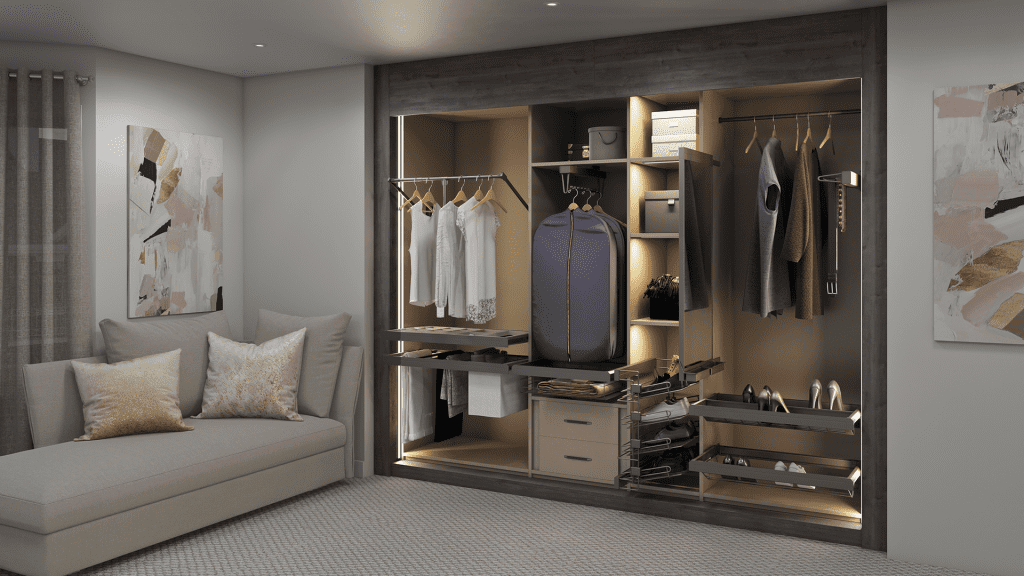
Do not overlook shoe storage
Shoes are often the first thing to end up on the bedroom floor when a wardrobe interior has not been thought through. Dedicated shoe shelves, angled racks or low open compartments can prevent that problem and make the whole room feel tidier.
The right option depends on your collection. Flat shelves are simple and versatile, but angled shoe storage can make pairs easier to view and access. If you own mostly everyday footwear, low-level shelving near the base of the wardrobe tends to be the most practical. If occasion shoes are stored less often, they can sit higher up in boxes or on upper shelves.
This is a good example of where bespoke design matters. A standard insert may not suit the number or style of shoes you own, while a made-to-measure interior can be sized around your actual needs.
Fitted wardrobes inside ideas for accessories
Accessories can create disproportionate clutter. Belts, scarves, jewellery, ties and handbags do not take up much space individually, but without dedicated storage they end up scattered across drawers and shelves.
A better solution is to build in smaller, more purposeful sections. Shallow drawers with dividers, pull-out trays, bag shelving and narrow compartments for smaller items can make the wardrobe feel far more organised. These details are often what turn a wardrobe from basic storage into something that genuinely supports your routine.
There is a balance to strike, though. Highly specific compartments are useful if you know exactly how you want to use them. If your needs change often, a more flexible interior may be the better choice.
Lighting makes the interior easier to use
Wardrobe lighting is sometimes treated as a luxury, but in practice it can be very functional. Internal LED lighting helps you see colours properly, find smaller items quickly and use the full depth of the wardrobe more effectively.
This is particularly helpful in deeper fitted wardrobes, darker bedrooms or designs with solid finishes that naturally reduce reflected light. Motion-sensor lighting can work well because it switches on when needed without adding another task to your routine.
It is not essential in every project, and budget may shape the decision, but when the wardrobe is part of a wider bedroom upgrade it can add a noticeably more considered finish.
Use awkward spaces properly
Some of the best wardrobe interiors come from rooms that seem difficult at first glance. Alcoves, loft rooms and sloping ceilings often need more careful planning, but they can produce excellent results when the inside is designed around the architecture.
In a loft bedroom, for example, lower sections under the eaves may be ideal for drawers or shelving, while taller central sections can handle hanging space. In alcoves, narrower compartments can store accessories, shoes or folded items while wider central runs take bulkier clothing.
This is where off-the-shelf furniture usually falls short. Gaps are wasted, ceiling height is ignored, and awkward angles become dead space. A fitted approach allows the interior to follow the room rather than fight against it.
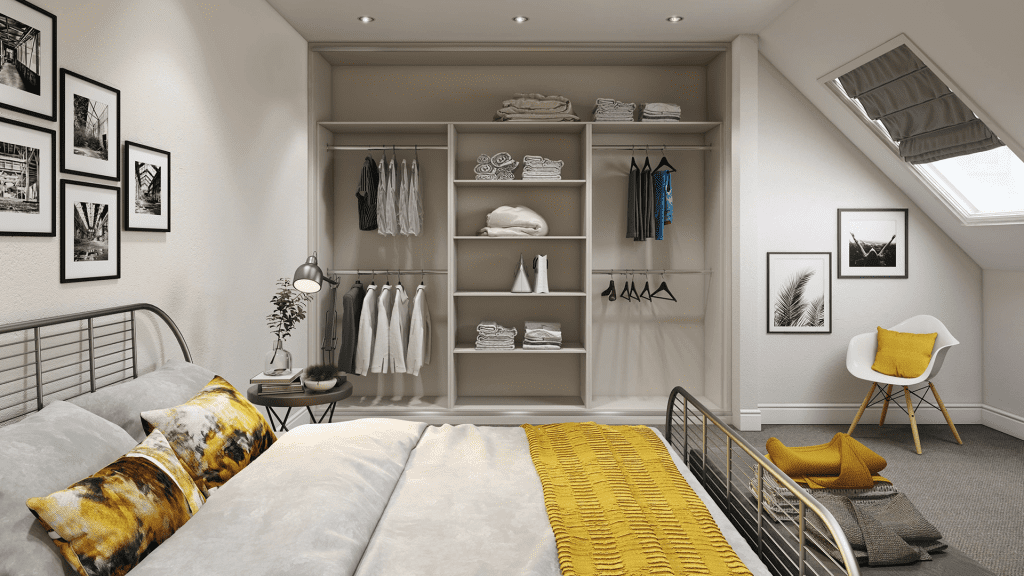
Think beyond clothing alone
A wardrobe does not always need to store only clothes. In many homes it also needs to absorb spare bedding, towels, ironing boards, luggage or even paperwork. That is not a problem, provided it is addressed from the start.
Trying to make a clothing-only layout handle household storage later usually leads to compromise. If the wardrobe needs to work harder, the interior should reflect that with a mix of deeper shelves, taller compartments or hidden sections for bulkier items.
This is often important in smaller homes where every fitted piece needs to justify its footprint. A wardrobe that looks elegant outside but fails to support everyday storage inside will not stay organised for long.
Plan for how you live now – and a little beyond
The most successful interiors are practical, not theoretical. They reflect your current wardrobe, your habits and your room. But they also allow a little flexibility for change. New seasons, changing routines, children growing up, or a house move into hybrid working can all affect how storage is used.
That is why a measured design process matters. At Glide & Slide, wardrobe interiors are planned around the customer rather than pulled from a fixed template, which is especially valuable in rooms with awkward dimensions or when the storage needs to do more than one job. It gives you a result that feels built for the house, not simply placed into it.
If you are weighing up fitted wardrobes inside ideas, start with the problems your current storage does not solve. The smartest interior is not the one with the most features. It is the one that makes getting dressed, putting things away and keeping the room calm feel far easier than it does now.

Glide and Slide Ltd provide professional design, manufacture and installation of fitted wardrobes, sliding wardrobes, made-to-measure fitted furniture, custom home office furniture & storage, media walls and bespoke kitchens across the West Midlands and surrounding counties. We regularly work in Birmingham, Sutton Coldfield, Solihull, Telford, Derby, Tamworth, Lichfield, Wolverhampton, Coventry, Leamington Spa and throughout Staffordshire, Derbyshire, Shropshire, Worcestershire, Warwickshire, Leicestershire, Nottinghamshire, Gloucestershire, and Herefordshire. We also offer a nationwide DIY supply service for customers outside our installation area.